The Property Everyone Walks Past
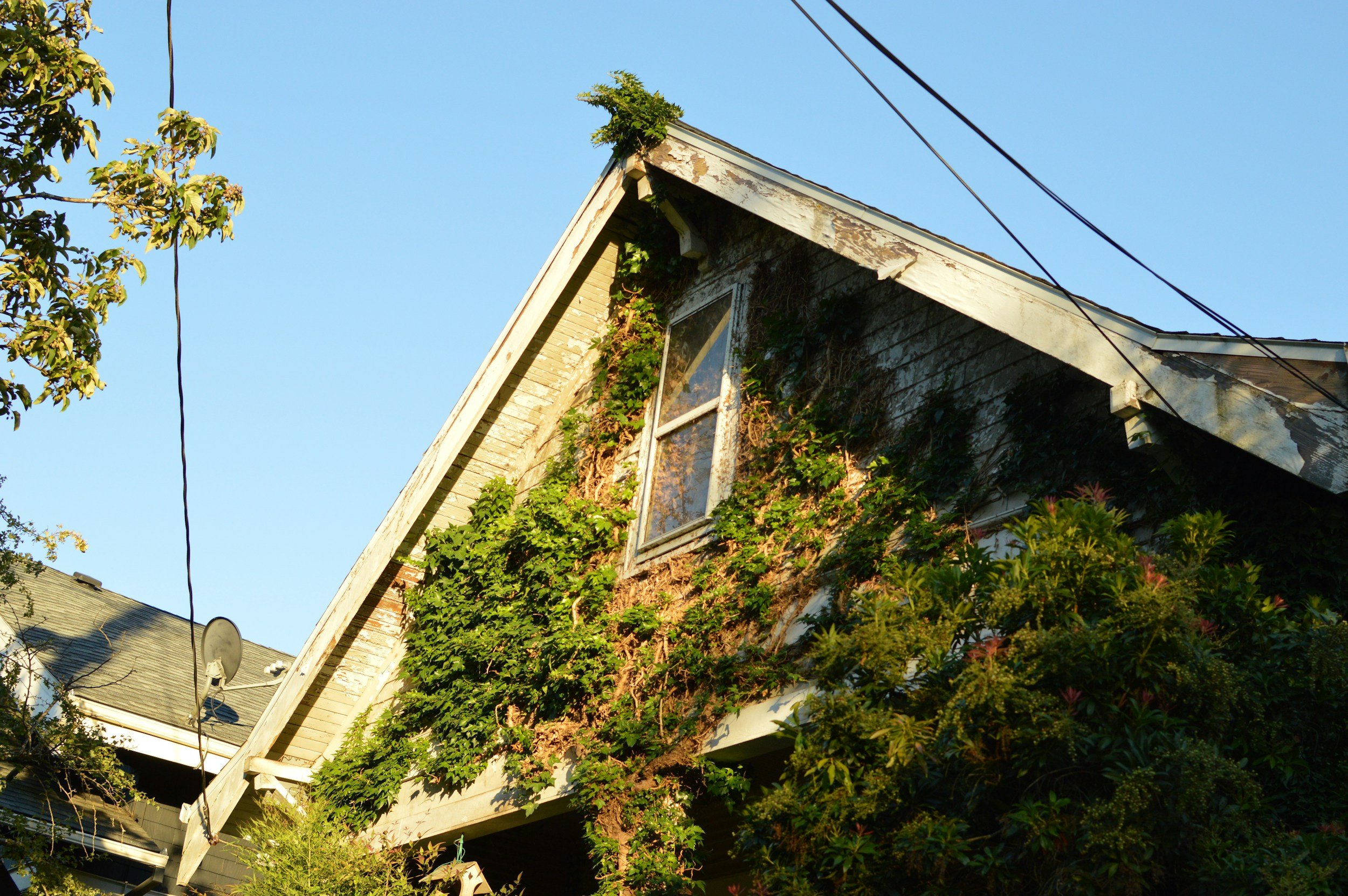
Overgrown
The market feels different now. Not dramatically different, just slower. The urgency has eased, buyers are taking longer to make decisions, and conversations that once ended with ‘Lets get started’ now end with, "We'll think about it." So much so that people are starting to ask whether this downturn is creating opportunities.
It's a reasonable question, and if they're right, we're probably only at the beginning. But it also misses something important. The better question isn't whether the market is creating opportunities — every market does. The question is whether you can recognise one before everyone else does, because the best opportunities rarely arrive looking like bargains. More often, they arrive looking like problems.
When markets are rising quickly, almost every property looks like a good decision. The market masks a lot of mistakes. A busy road becomes something buyers are willing to tolerate. An awkward floor plan becomes a renovation for another day. A difficult block somehow feels manageable, because rising prices create the impression that every compromise will eventually be rewarded.
Slower markets are less forgiving. Buyers have more choice, so they become more selective, and the weaknesses everyone was happy to ignore start to matter again. That's not necessarily a bad thing. It simply means uncertainty becomes easier to see.
One of the biggest mistakes I see buyers make is assuming all problems are equal. They're not. Most houses don't disappoint because of poor design. They disappoint because important decisions were made before anyone truly understood their consequences. Some problems are permanent, some are expensive, and some simply look expensive because nobody has done the work to understand them — and from the street, they can all look exactly the same. A house with a poor floor plan and a house on a fundamentally constrained site might both struggle to attract interest, yet one may become an exceptional home while the other never will. The challenge isn't identifying that a problem exists. The challenge is understanding its consequences.
Very few people align their spending to the market. Instead, they ask whether they can renovate without spending a fortune, whether they can add the space they need, whether council is likely to support the changes they're considering, and what they might not be seeing. They're not really asking about architecture. They're asking whether they can make a good decision. That's a very different conversation.
Assessing a property properly is rarely about whether it's beautiful. It's about asking a different set of questions. Which problems are permanent? Which are simply expensive? And which only appear expensive because nobody has yet taken the time to understand them? The answers to those questions often determine whether a property becomes someone's best decision or their most expensive mistake.
One observation has held up more consistently than almost any other: people often discount uncertainty more heavily than they discount actual cost. A property with a known problem is often easier to assess than one with an unknown one. When buyers can't confidently answer questions like Can we renovate it? Will council support it? What will it actually cost? Is the site working against us? they usually step back. Sometimes that's exactly the right decision. Sometimes it's where the opportunity lives. The advantage doesn't come from being optimistic. It comes from replacing uncertainty with understanding.
A few years ago, I assessed a property on a sloping site in Eaglemont. At first, the slope seemed to create too many unknowns. Would the engineering be prohibitive? Would the planning controls limit what could be built? Would the construction cost overwhelm the opportunity?
But the slope itself was not the real problem. The problem was that nobody yet understood its consequences. Once the likely engineering, planning constraints, construction costs and design opportunities were properly assessed, the site became easier to judge. Nothing about it had changed. The slope was still there, and the project was not suddenly cheaper or simpler. What changed was the buyers’ understanding of what they were taking on. That clarity allowed them to decide whether the opportunity was worth the cost.
People often talk about timing the next property cycle, but the reality is that nobody really knows where the bottom of a market sits until it's already passed. From my side of the industry, what matters far more is preparation. Design takes time, planning approvals take time, and construction takes time. The people who are ready when confidence returns are rarely the ones who guessed the market correctly. More often, they're the ones who started making good decisions while everyone else was waiting for certainty. They weren't waiting for confidence to appear. They were creating it.
So is the downturn creating opportunities for buyers? I think it is. Not because quality properties are suddenly cheap, not because distressed sales are appearing on every corner, and not because buying in a slower market is somehow easier. It is because slower markets are less willing to overlook uncertainty, and people who understand its consequences gain an advantage.
The property everyone walks past isn't always misunderstood. Sometimes it's simply the wrong property. But occasionally it's something much more valuable: a property whose future is worth considerably more than its present suggests, not because the market has mispriced it, but because most people haven't yet understood what it could become.
A house is rarely the product of design alone. It's the product of the decisions made long before design begins. The people who make the best decisions are rarely the ones who perfectly time the market. They're the ones who understand the consequences before they commit. That's where the best opportunities usually begin.