
About
The decisions that shape a project almost never feel like decisions at the time.
They arrive as momentum. A useful conversation with a builder. A rough number on a napkin. A sketch that everyone agrees is just exploratory. And then, quietly, the direction sets.
It's a sequence and once it starts moving, changing it gets expensive.
I've seen this happen too many times to think it's accidental.
Why the builder background matters
Most of what I know about this came from spending years both designing projects and building them.
I trained as an architect. I also held a builder's licence and spent years on site — not observing, but building. That combination changes what you notice. Design decisions that read as elegant on a drawing can create expensive problems when the trades arrive. Budgets that feel conservative in a meeting can unravel the moment an existing wall comes down.
I've had both of those conversations. I know which one is harder to recover from.
In 2021 I returned to a one-person practice built around a single principle: the most valuable thing I can offer is not a drawing. It's a clear read on where a project holds together and where it doesn't; before anything is locked in.
The thinking, documented
Find Your Way Home is where I documented what two decades on both sides of the industry actually taught me — about how projects succeed, where they quietly drift off course, and what the professionals who get it right do differently from everyone else.
If you want to understand how I think before we speak, it's the right place to start.
Why design still matters
I used to look at photos of Gaudí's buildings and think they were ugly. Then I stood inside one and realised I'd completely misunderstood them. Not because my taste changed, but because I could finally feel what the building was doing.
That's the problem with how buildings get judged now. Images have an impenetrable surface. Buildings are something else entirely.
A photograph can show the winter morning light of a room. A building holds that moment every day for decades.
A photo can't explain why one space calms you while another leaves you unsettled. Why some rooms make you slow down and others quietly push you through.
Every project I've worked on, regardless of size or budget, eventually comes back to the same thing.
You have to feel it.
Not look at it. Stand in it.
A render won't tell you. A plan won't tell you. Numbers definitely won't tell you.
Space is felt.
The name
Every building project has three essential participants: the architect, the builder, and the owner. Most of the time they pull in different directions — different priorities, different languages, different definitions of success.
Three Hat Buildings exists in the space between them. The name is a reminder that good buildings require all three perspectives in the room at the same time, early enough to matter. That's rarer than the industry would have you believe.
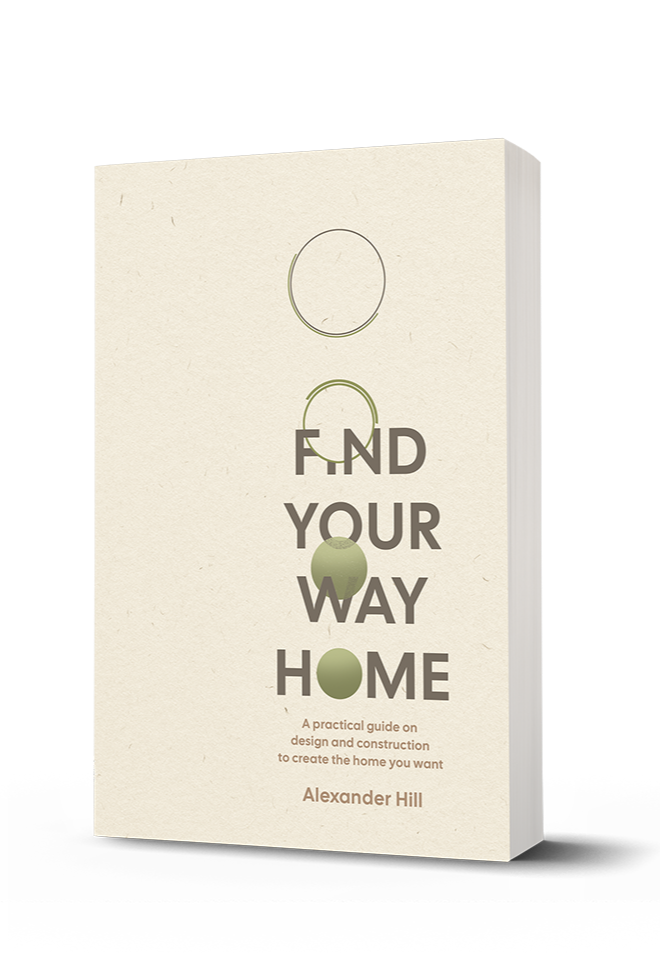
Find Your Way Home
Caught Between Builder Plans & Grand Designs? Here’s Your Middle Path.
Australia’s residential construction industry generates over $100 billion a year. In Victoria alone, more than 7,000 single family homes worth over $16 billion are built annually without architectural input. Too many families pour their life savings into houses that miss out on simple design principles that deliver better layouts, healthier materials, and long-term value.